Hospitals rarely run a single generation of patient monitors. Budget cycles, unit expansions, and equipment replacements over the years leave most facilities managing a mix of monitor platforms — and within the Philips IntelliVue line specifically, that usually means a combination of MP-series and MX-series monitors deployed across different units. Understanding what separates the two families, and where each is best suited, helps biomedical teams make better decisions about parts sourcing, repair support, and rental capacity.
The MP-Series: Compact, Flexible Bedside and Transport Monitoring
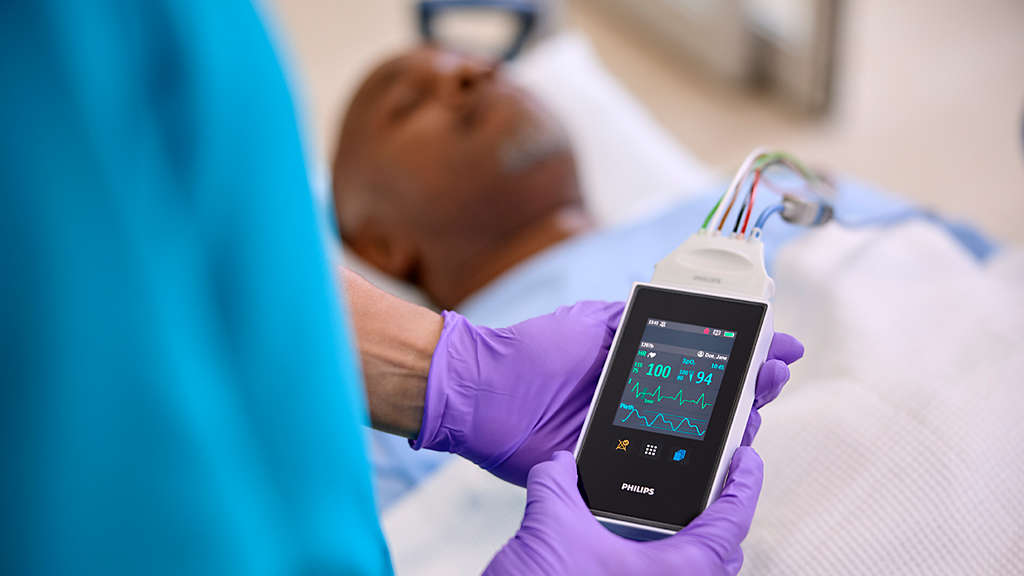
The IntelliVue MP-series — spanning the MP5, X2, MP30, MP50, MP70, and MP90 platforms — covers a range of clinical monitoring needs from compact transport monitoring to full-featured bedside use. The MP5 and X2 are commonly deployed for patient transport and smaller care areas, while the MP30 and MP50 serve general floor monitoring, and the MP70 and MP90 are typically found in higher-acuity settings requiring more parameters and larger displays.
Because MP-series units have been deployed across hospitals for many years, facilities running them often encounter a common challenge: locating replacement parts, assemblies, and accessories compatible with the specific hardware configuration and software revision installed on a given unit. Not every MP5 or MP70 in a facility’s fleet is running the same software version, and compatibility matters when sourcing a replacement component.
The MX-Series: Expanded Monitoring for Higher-Acuity Care
The IntelliVue MX-series — including the X3, MX450, MX500, MX550, MX700, and MX800 — generally supports more advanced monitoring requirements. The X3 and MX450 are compact and transport-capable, while the MX500 and MX550 step up to mid- and high-acuity bedside use, and the MX700 and MX800 serve as the flagship platforms for the most complex monitoring environments.
MX-series monitors rely more heavily on modular architecture — parameter modules, MMS and extension modules, and daughter boards that plug into the monitor to expand its measurement capability. This modularity is a strength for flexibility, but it also means that repair and lifecycle management require sourcing compatible modules and internal assemblies specific to each monitor’s configuration, rather than treating the monitor as a single fixed unit.
What This Means for Parts, Repair, and Rental Planning
For biomedical teams managing a mixed IntelliVue fleet, the practical implication is that parts sourcing and repair support cannot be a one-size-fits-all arrangement. MP-series units need a parts and accessories supplier who can match compatible attachments across multiple hardware configurations and software revisions. MX-series units need a partner who understands parameter modules, MMS and extension modules, daughter boards, and internal assemblies well enough to source and repair them without introducing compatibility issues.
Rental planning follows the same logic. A facility covering a census surge or a unit transition needs to know whether the rental units being brought in are MP-series or MX-series, and whether they’ll integrate cleanly with the facility’s existing central monitoring infrastructure and software environment.
Quest Medical Supply provides sales, service, repair, and rental support across the full Philips IntelliVue lineup — both MP and MX-series platforms — including replacement parts, assemblies, accessories, and compatible attachments for MP-series monitors, and parameter modules, MMS and extension modules, daughter boards, internal assemblies, and replacement components for MX-series monitors. Contact our team to discuss parts availability, repair turnaround, or rental support for your facility’s IntelliVue fleet.